English
  Español
  português
  Ελλάδα
  Malay
Malay  Nederland
Aug 08, 2026

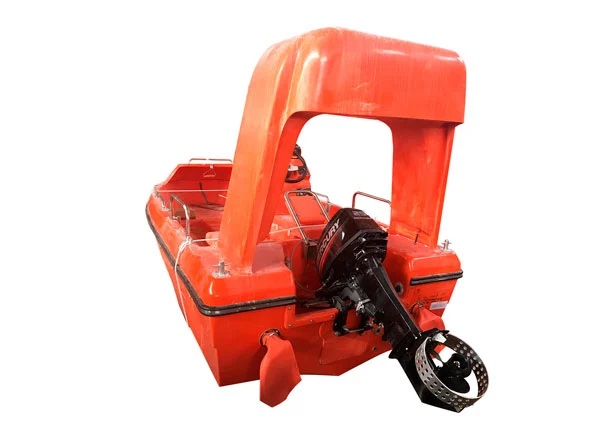
The ocean has long symbolized opportunity and challenge, yet it also carries risks that require reliable safety solutions. Among these, the emergency lifeboat stands as one of the most crucial assets in ensuring the survival of seafarers when accidents strike. Built on international standards and engineered to withstand harsh marine conditions, these vessels embody both technological innovation and human resilience. Companies like Matchau dedicate themselves to manufacturing lifeboats and rescue boats that adhere to the strictest global regulations, offering real protection for lives at sea.
An emergency lifeboat is not simply a vessel; it is a life-preserving system designed to secure safety during critical evacuations. Whether deployed after fire, collision, or other catastrophic events, lifeboats provide immediate refuge and a structured method of survival until rescue arrives. Their design takes into account stability, buoyancy, and durability, making them a dependable last line of defense. For industries operating in shipping, offshore energy, or passenger transport, the availability and reliability of such equipment are essential in complying with safety laws and in protecting lives in unpredictable environments.
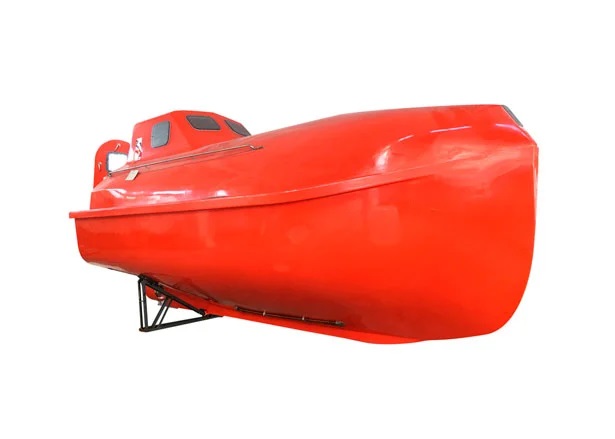
To ensure absolute reliability, emergency lifeboats must comply with strict global standards. International frameworks such as the International Convention for the Safety of Life at Sea (SOLAS) and its amendments MSC.48(66) and MSC.81(70) have set benchmarks that manufacturers follow closely. Matchau aligns its designs and production processes with these requirements, reinforcing its focus on both safety and performance. This compliance means that every emergency lifeboat not only performs effectively under test conditions but also proves dependable in real emergencies where resilience makes the difference between life and death.
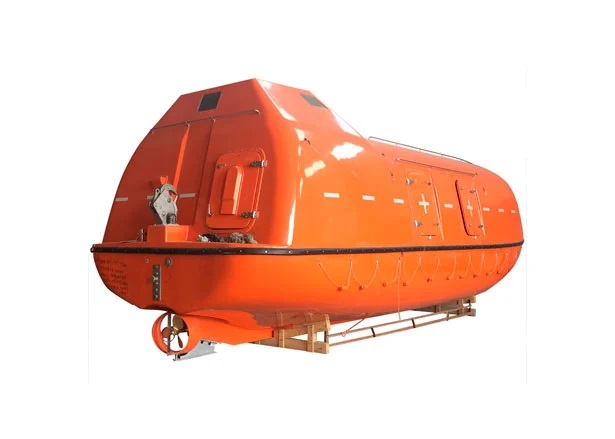
Beyond compliance, continuous innovation plays a pivotal role in advancing the efficiency of emergency lifeboats. Modern designs integrate enhanced buoyancy systems, fire-retardant construction materials, and improved launching mechanisms that ensure rapid deployment even under adverse sea states. The use of advanced raw materials and precision in manufacturing guarantees both external and internal structural integrity. Companies like Matchau place heavy emphasis on these details, ensuring that lifeboats not only meet international norms but also address the unique requirements of customers facing diverse maritime challenges. Innovation ensures that lifeboats are not static solutions but evolving technologies responding to the changing nature of marine operations.
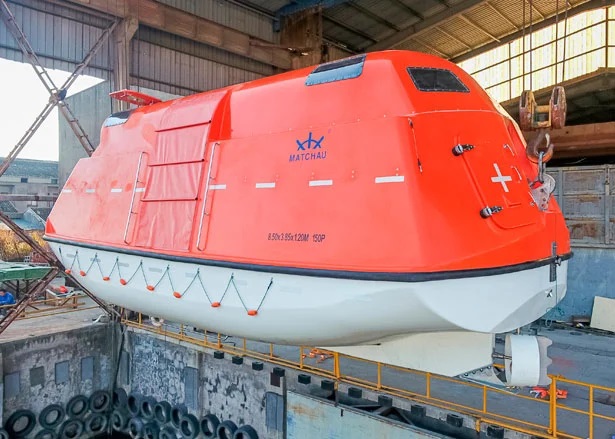
While the lifeboat type and the rescue boat type share the mission of saving lives, they serve distinct purposes. A lifeboat is an enclosed or partially enclosed craft designed for maximum protection and long-term survival, while a rescue boat is typically smaller, faster, and intended for immediate response and retrieval. Both types are indispensable in a comprehensive maritime safety system.
Feature | Emergency Lifeboat | Rescue Boat |
Primary Function | Long-term survival after abandonment | Quick response and retrieval operations |
Design | Enclosed or partially enclosed | Open or semi-enclosed, faster maneuvering |
Capacity | Larger, built to carry multiple passengers | Smaller, designed for rapid deployment |
Regulation Compliance | SOLAS, MSC.48(66), MSC.81(70) | SOLAS standards for fast rescue |
This comparison underlines the complementary nature of these two vessels in safeguarding maritime operations. Both play essential roles in ensuring a layered approach to emergency preparedness.
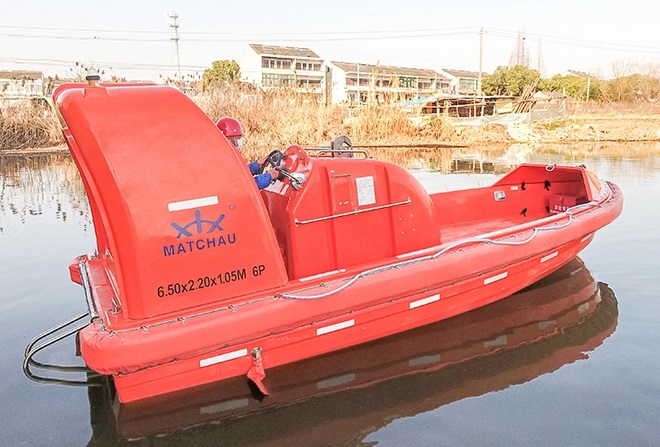
Beyond their technical specifications, emergency lifeboats represent security and reassurance in times of crisis. They embody the principle that every life is worth protecting, no matter the circumstances. For seafarers, stepping into a lifeboat during an emergency is not just a matter of procedure but a profound moment of trust in engineering, craftsmanship, and adherence to safety values. With companies like Matchau driving continuous improvements in design and safety features, the emergency lifeboat remains more than equipment—it is a vessel of hope, carrying people safely through the uncertainties of the sea.