English
  Español
  português
  Ελλάδα
  Malay
Malay  Nederland
Dec 06, 2024

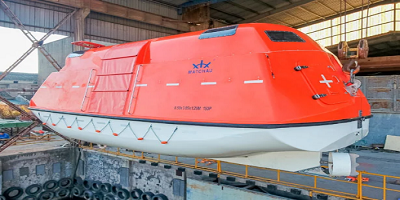
In the demanding world of maritime operations, safety equipment is the ultimate safeguard between risk and survival. Among the various types of survival craft, the partially enclosed lifeboat has become a trusted solution for many vessels navigating challenging seas. It combines robust protection with practical design, making it suitable for a wide range of applications across shipping, offshore, and passenger industries. Companies like Matchau emphasize quality, innovation, and adherence to international standards to ensure that these lifeboats meet the most rigorous safety demands.
A partially enclosed lifeboat is designed with a canopy or cover that protects passengers from severe weather while maintaining open sections for ventilation and accessibility. This unique structure bridges the gap between fully enclosed lifeboat, which offers maximum protection, and open type lifeboat, which is more exposed but easier to deploy. The design philosophy ensures that individuals on board remain shielded from wind, waves, and rain while still benefiting from improved visibility and natural airflow. This balance of protection and practicality makes partially enclosed lifeboats highly versatile in maritime safety operations.
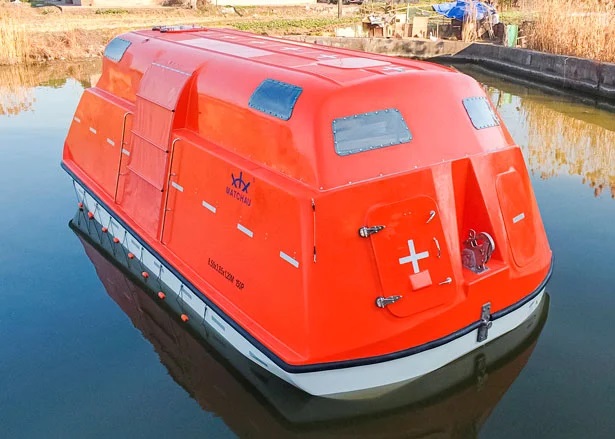
The core strength of the partially enclosed lifeboat lies in its structural resilience and safety-focused engineering. Manufactured with high-quality raw materials and fine workmanship, these lifeboats demonstrate durability under extreme sea conditions. Reinforced hulls, buoyancy compartments, and carefully engineered launching systems ensure that they can be deployed swiftly in emergencies. The canopy design not only shelters passengers but also enhances survival chances by minimizing exposure to hypothermia and exhaustion. Companies like Matchau implement strict inspection procedures to guarantee both external and internal quality, ensuring that every lifeboat delivered provides dependable performance in critical situations.
Choosing the right lifeboat depends on vessel type, operating environment, and safety requirements. Partially enclosed lifeboats occupy an important middle ground between open and fully enclosed designs.
Feature | Partially Enclosed Lifeboat | Open Lifeboat | Fully Enclosed Lifeboat |
Protection Level | Moderate protection from weather and sea spray | Minimal protection, fully exposed | Maximum protection from harsh environments |
Ventilation | Natural airflow with partial coverage | Excellent ventilation | Limited ventilation, requires controlled system |
Visibility | Good balance between protection and visibility | Full visibility | Limited visibility due to enclosure |
Deployment | Relatively easy to launch | Easiest to launch | More complex launch systems required |
Typical Use | Cargo ships, offshore vessels, mixed conditions | Coastal vessels, smaller operations | Passenger ships, extreme offshore environments |
This comparison highlights why many shipping operators select the partially enclosed lifeboat as the optimal balance of safety, usability, and comfort.
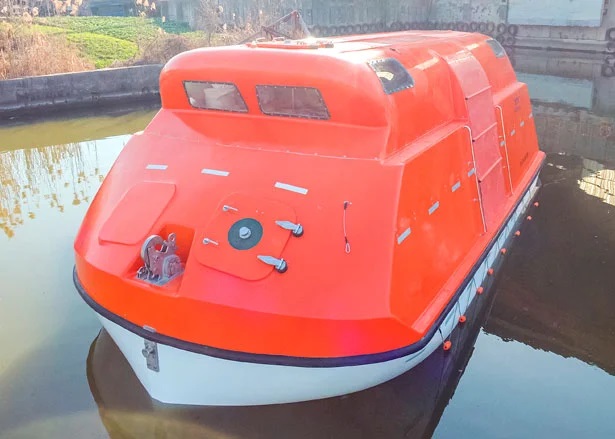
The versatility of partially enclosed lifeboats allows them to be applied in numerous maritime sectors. On cargo ships, they provide robust safety measures without the complexity of fully enclosed models. Offshore platforms often rely on them for their blend of protection and accessibility, ensuring crews can evacuate quickly while still being sheltered during rescue waits. Passenger vessels operating in moderate climates also benefit from the partially enclosed design, which offers reassurance to passengers without sacrificing airflow or comfort. With global shipping lanes subject to varied conditions, the adaptability of these lifeboats makes them a practical choice in both commercial and industrial marine operations.
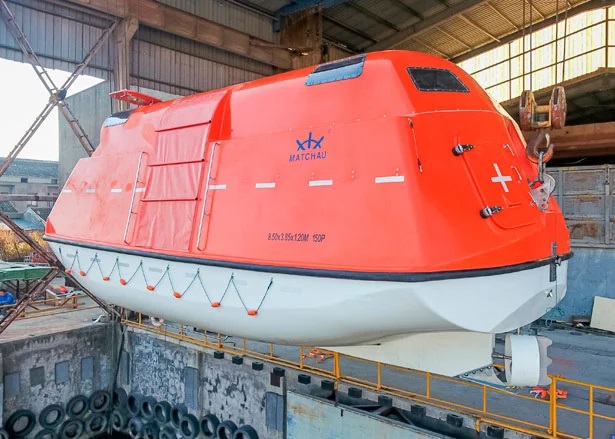
Reliability in life-saving equipment depends not only on design but also on adherence to recognized safety standards. A partially enclosed lifeboat must comply with international conventions such as SOLAS and amendments like MSC.48(66) and MSC.81(70). By aligning manufacturing with these global requirements, companies like Matchau ensure that every product is capable of protecting lives in compliance with strict maritime regulations. This commitment to standards, combined with the company's emphasis on innovation, enables the partially enclosed lifeboat to remain a trusted solution for vessels worldwide.