English
  Español
  português
  Ελλάδα
  Malay
Malay  Nederland
.jpg "Demystifying Load Test Water Bags in Lifeboat Testing Protocols")
Mar 05, 2024

Marine safety equipment plays a vital role in ensuring the survival and safety of individuals in aquatic environments. Among these tools, the lifebuoy ring stands out as an essential device designed for lifesaving situations. Understanding how to effectively use a lifebuoy ring in rescue scenarios can significantly enhance safety measures on boats and near water bodies. This article will provide detailed insights into throwing techniques, attachment options, boat requirements, training drills, and maintenance checks to maximize the effectiveness of lifebuoy rings in emergencies. Whether you are equipped with an automatic inflatable life jacket, a marine fire extinguisher, or a foam fire extinguisher, knowing how to utilize every piece of marine safety equipment can be the difference between a successful rescue and a tragedy.
Proper throwing techniques are essential for ensuring that the lifebuoy ring reaches the intended person in distress. The goal is to accurately deliver the buoy, allowing the individual to grasp it without excessive effort. Here are some key tips:
Positioning: Stand with your feet shoulder-width apart to maintain balance.
Gripping: Hold the lifebuoy ring firmly with one hand while using the other to guide the throw.
Throwing: Use the underhand or overhand method based on comfort and distance. The underhand throw is suitable for shorter distances, while the overhand throw is ideal for longer distances.
Trajectories: Aim to throw slightly past the person to allow for the buoy to drift back to them with the wave action.
Practice these techniques during safety drills to improve accuracy and confidence. Utilizing a marine compass can assist in navigating optimal angles and directions.
Attachment options for lifebuoy rings are crucial for ensuring that the device is always within reach during emergencies. Here are some typical configurations:
Attachment Type | Description | Best Use |
Fixed Bracket | A stationary holder often mounted on ships or docks. | Permanent installations on vessels or piers. |
Quick-Release Clip | Allows for rapid deployment of the lifebuoy ring. | Emergency scenarios requiring swift access. |
Rope Line | Attached through a rope that the rescuer can hold onto as the buoy is thrown. | Enables controlled throws and quick rescues. |
These attachments support effective deployment whether on a rescue boat, free fall lifeboat, or any other sea vessel.
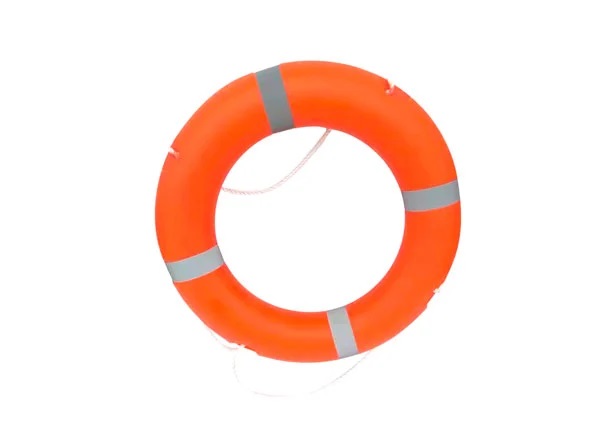
Marine vessels, such as lifeboats for sale or enclosed lifeboat for sale, often follow specific regulations regarding safety equipment like lifebuoy rings. These requirements ensure that boats are equipped to handle emergencies efficiently:
Quantity: Boats must have an adequate number of buoys relative to their size and passenger capacity.
Accessibility: Buoys should be easily accessible where crew and passengers can reach them quickly.
Visibility: Ensure that every lifebuoy ring is brightly colored and features SOLAS reflective tape for visibility in low light conditions.
Compliance: Follow local and international maritime regulations when equipping vessels with safety tools.
Authorities responsible for marine safety equipment may conduct checks to verify compliance and your vessel might require components like a hydrostatic release unit to ensure safety gear stays operational and up-to-date.
Conducting regular training drills is fundamental to prepare for real-world emergencies where marine safety equipment is necessary. Successful drills incorporate:
Role Play: Simulate man-overboard scenarios to practice lifebuoy ring deployment.
Feedback Sessions: Review each drill to highlight effective practices and identify areas for improvement.
Varied Conditions: Practice in diverse conditions, such as day, night, calm waters, and rough seas.
Utilization of Tools: Incorporate other equipment like waterproof flashlight and lifejackets to replicate a comprehensive scenario.
An extensive drill regime ensures that rescuers are familiar with the operation and handling of various marine safety equipment, including automatic life jackets and nautical signal flags.
Maintenance is key to ensuring that lifebuoy rings and other safety devices remain ready for deployment when needed. Follow these guidelines for effective maintenance:
Regular Inspections: Conduct checks for damage, wear, and tear, replacing any compromised marine equipment promptly.
Cleaning: Keep the equipment clean from salt residue and other corrosive elements.
Storage Conditions: Ensure proper storage to prevent exposure to extreme weather, which can degrade materials.
Up-to-Date Certification: Verify that the equipment meets current safety standards and certifications.
Proactive upkeep is essential, ensuring that when a rescue boat or enclosed lifeboat sets sail, it is thoroughly equipped with functioning emergency escape breathing apparatus and other life-saving devices.
Understanding and effectively using a lifebuoy ring in rescue operations is paramount for enhancing safety in all maritime environments. Whether part of the marine safety equipment or aboard a rescue boat, ensuring correct handling practices can save lives. Regular training, proper maintenance, and adherence to regulations fortify an integrated safety system on any watercraft. Investing in reliable lifejackets, appropriately configured marine extinguishers, and a dependable boat battery charger anchors a robust safety culture in the maritime industry. Prioritize safety with marine safety equipment, and remember that preparation is every rescuer's greatest tool.