English
  Español
  português
  Ελλάδα
  Malay
Malay  Nederland
Feb 20, 2025

In the unpredictable world of maritime travel, the speed at which a vessel can succumb to the elements is staggering. History has shown that in catastrophic events—such as a sudden collision or a rapid hull breach—crew members often do not have the luxury of time to manually launch life-saving equipment. In these high-stakes moments, survival depends on automation. The most critical component in this automated chain is the Hydrostatic Release Unit (HRU).
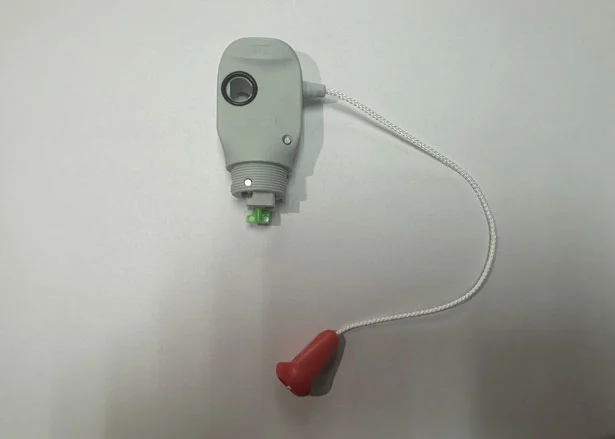
As a specialized device designed to release a liferaft automatically if a ship sinks, the HRU is a mandatory safety requirement under the International Convention for the Safety of Life at Sea (SOLAS). The HRU serves as the fail-safe link between the vessel and its survival craft, ensuring that even if no one is left on deck to pull the lever, the life-saving equipment will still deploy.
The fundamental principle of an HRU is simple yet ingenious: it uses water pressure to activate a release mechanism. As a ship sinks, the HRU is submerged. Most HRUs are calibrated to activate at a depth between 1.5 and 4 meters.
Inside the unit is a pressure-sensitive diaphragm. When the vessel reaches the predetermined depth, the external water pressure overcomes an internal spring, pushing a sharp knife or a firing pin. This action cuts through a strong plastic bolt or a securing rope known as the lashing, which holds the liferaft container in its cradle. Once the lashing is severed, the buoyant liferaft container floats free of the sinking vessel.
One of the most misunderstood aspects of liferaft deployment is how the raft inflates and remains accessible without being pulled down by the sinking ship. This is solved by a three-step process involving the painter line and the weak link.
Release: The HRU cuts the lashing, and the raft floats up.
Inflation: The raft is still connected to the ship by the painter line (the rope that triggers inflation). As the ship continues to sink, it pulls the painter line to its full length, which triggers the CO2 cylinder and inflates the raft.
Breakaway: Once the raft is inflated, it creates significant upward buoyancy. At this point, the weak link snaps, a specialized component with a specific breaking strength. This prevents the sinking vessel from dragging the inflated liferaft down with it, allowing the raft to remain on the surface for survivors to find.
Because the integrity of this sequence depends on the quality of the hardware, professionals often turn to proven manufacturers. The Matchau hydrostatic release unit is a prime example of high-performance maritime engineering. Matchau’s HRUs are built to withstand the corrosive marine environment while ensuring a precise, reliable cut when the pressure reaches the critical threshold. Their units are recognized for their durability and clear installation markings, which are vital for preventing human error during setup.
An HRU is only effective if installed correctly. A common and dangerous mistake is over-shackling the system, for example, shackling the liferaft's painter line directly to the ship’s hull rather than through the HRU’s weak link. If this happens, the raft will inflate but then be dragged underwater by the ship because there is no weak link to break.
To ensure proper installation, operators should:
Ensure the HRU is placed so that the liferaft can float free and clear of any overhead obstructions like awnings or rigging.
Verify that the weak link is properly connected to the painter line.
Use only stainless steel shackles and ensure they are not tightened in a way that prevents the release mechanism from moving.
Unlike some maritime equipment that can be serviced indefinitely, most HRUs are designed as disposable units with a fixed lifespan. The standard service life for a disposable HRU is two years from the date of installation.
Owners and safety officers must perform regular visual inspections. The HRU should be checked for signs of physical damage, such as cracks in the casing or corrosion on the metal parts. Most importantly, the expiry date must be clearly marked on the unit. An expired HRU is a major deficiency during Port State Control (PSC) inspections and, more importantly, a catastrophic risk to the crew.
Investing in high-quality replacements, such as those found in the Matchau safety product line, ensures that the replacement process is seamless. These units are often favored because of their clear labeling and compatibility with a wide range of liferaft brands and cradle designs.
Safety at sea is a combination of training, vigilance, and reliable technology. While we hope that a liferaft never needs to be deployed, the hydrostatic release unit for liferaft provides the peace of mind that if the worst should happen, the equipment will be there on the surface waiting for the survivors.
By understanding the mechanics of the HRU from the pressure-activated diaphragm to the breaking of the weak link, mariners can better appreciate the importance of correct installation and maintenance. Utilizing components like the Matchau HRU ensures that this silent guardian will perform its duty with precision, providing a vital bridge between a sinking vessel and a life-saving raft. In the cold reality of a maritime emergency, the HRU is the hand that reaches out when no one else can.