English
  Español
  português
  Ελλάδα
  Malay
Malay  Nederland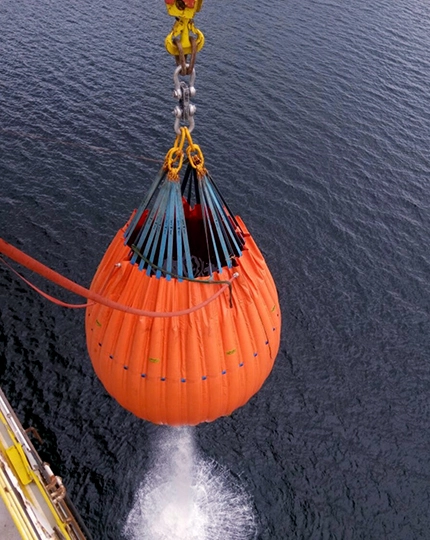
Sep 05, 2023

In the hierarchy of maritime safety equipment, the inflatable life raft stands as the ultimate fail-safe. When a vessel is compromised by fire, flooding, or collision, the life raft becomes a floating sanctuary, designed to sustain human life in the most hostile environments on Earth. However, a life raft is not merely a rubber boat; it is a highly engineered system comprising dozens of specialized components working in unison. Understanding the anatomy of a life raft is critical for both emergency preparedness and routine maintenance.
Before a life raft is even inflated, its protective housing plays a vital role. Most marine life rafts are stored in a GRP (Glass Reinforced Plastic) container or a durable valise. This canister protects the fabric from UV rays, salt spray, and physical impact.
Crucial to this stage is the Painter Line. This long rope serves two purposes: it connects the raft to the ship and acts as the trigger for inflation. When the line is pulled to its full length, it opens the gas cylinder valve. For automated deployment, the Hydrostatic Release Unit (HRU) is the most critical safety component. If the ship sinks before the raft can be manually launched, the HRU uses water pressure to cut the lashings, allowing the raft to float free and inflate automatically.
The core structure of the liferaft consists of buoyancy tubes or chambers. Most SOLAS-approved rafts feature a twin-tube design, an upper and lower chamber. This redundancy is a life-saving feature; if one chamber is punctured by debris or a shark attack, the remaining chamber provides enough buoyancy to keep the occupants above water.
These tubes are connected by non-return valves, ensuring that gas flows where it is needed but cannot escape back through the system. To maintain the integrity of these chambers over years of storage, the valves and seals must be of the highest grade, as any slow leak would render the raft useless during an emergency.
The canopy or tent is the raft's primary defense against the elements. It is usually bright orange for high visibility and features reflective tape. The canopy protects survivors from hypothermia in cold climates and heatstroke in the tropics. It often includes a rainwater collection system, which channels water into storage bags for drinking.
Underneath, the inflatable floor provides vital insulation. Without an air-filled floor, the cold temperature of the ocean would quickly leach heat from the survivors’ bodies through the thin bottom material. This double-floor design acts like a thermal barrier, essential for long-term survival.
A common risk for life rafts in heavy seas is capsizing or tumbling. To prevent this, rafts are equipped with ballast bags (water pockets) on the underside. These bags quickly fill with seawater, creating weight that lowers the center of gravity and acts as an anchor to keep the raft upright against wind and waves.
To assist survivors in entering the raft from the water, a boarding ramp or ladder is located at the entrance. Inside, lifelines are strung both internally and externally, giving people in the water something to hold onto and providing those inside with stability during rough transit.
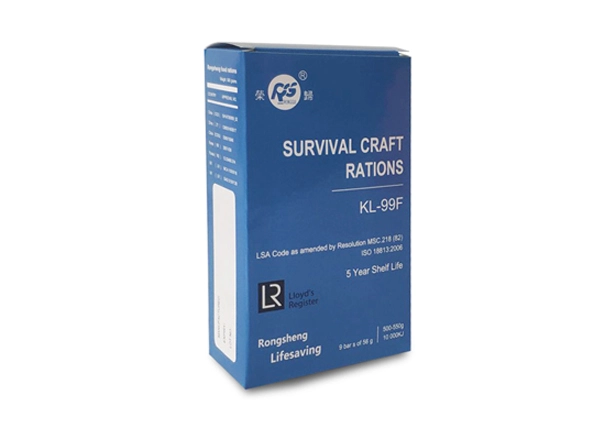
Inside every raft is an emergency pack, often referred to as a SOLAS A or B pack. This includes flares, smoke signals, thermal protective aids (TPAs), food rations, and medical kits. It also contains tools for the raft itself, such as a bellows for manual topping up of air, a repair kit, and a sea anchor (drogue) to reduce drift.
Because these rafts are stored in high-vibration and high-salt environments for years, the specialized hardware can degrade. This is where high-quality replacement parts become essential. For shipowners and safety officers, sourcing reliable components is a priority. Matchau’s parts of inflatable life raft offer a comprehensive range of critical items, including hydrostatic release units, specialized valves, and repair materials. Ensuring that your raft is serviced with industry-standard parts guarantees that the inflation triggers and structural seals will function perfectly even after years of dormancy.
The gas cylinder is typically filled with a mixture of CO2 and Nitrogen. When the painter line is pulled, the gas is released through high-pressure hoses into the tubes. The entire inflation process usually takes less than 60 seconds. To prevent the raft from bursting due to over-inflation, especially as the sun heats the gas, pressure relief valves are installed to vent excess pressure automatically.
An inflatable life raft is a masterpiece of safety engineering, designed to transform from a compact box into a sophisticated survival system in a matter of seconds. By understanding the function of every part from the ballast bags to the canopy, mariners can better appreciate the importance of regular maintenance and high-quality hardware. When the unthinkable happens, the integrity of these components is the only thing standing between the survivor and the sea.